AI Tutor Reviews for Serious Language Learners
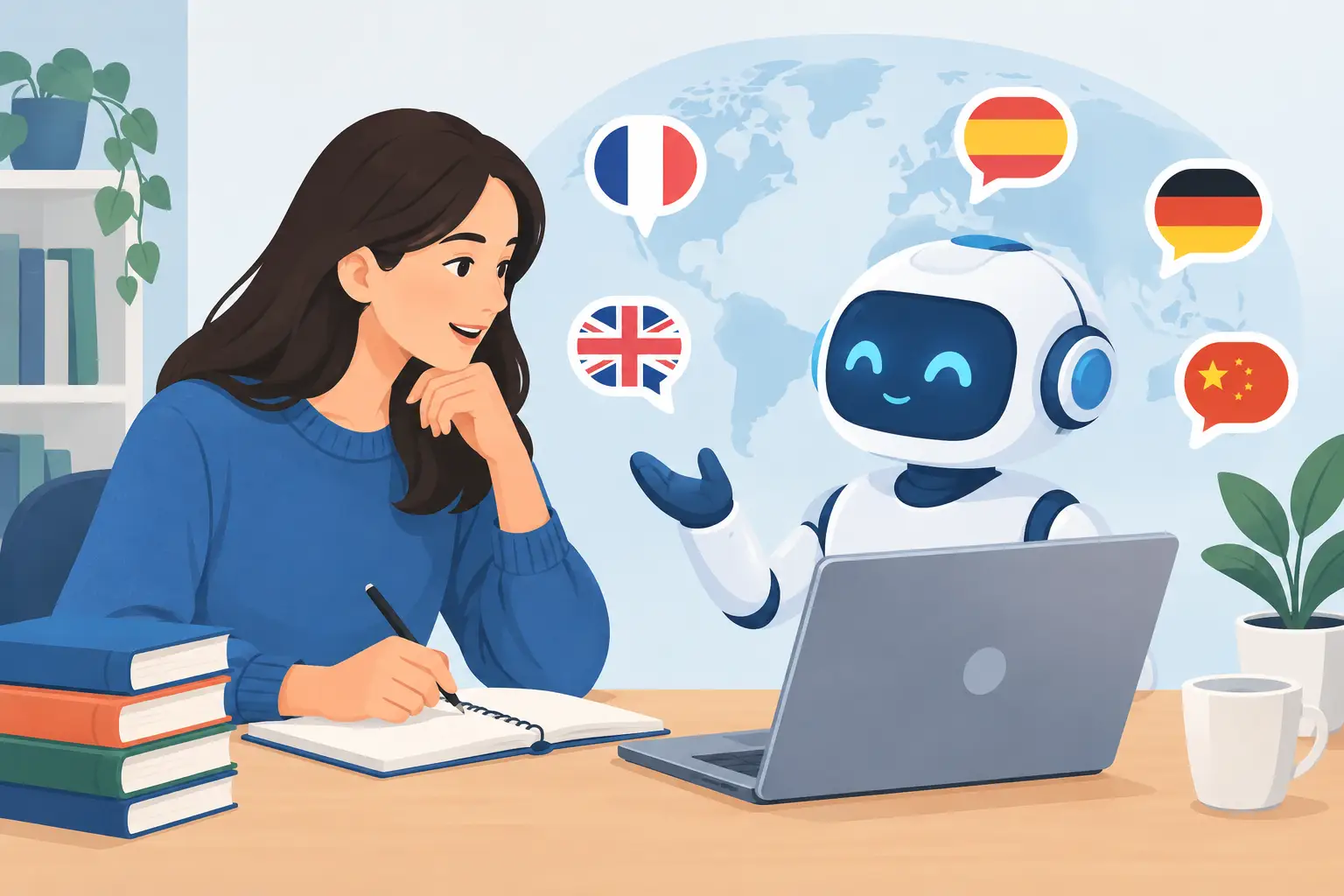
Most AI tutor reviews focus on the first five minutes: how quickly the chatbot replies, whether its corrections sound polished, or how human the conversation feels. Those things matter. But for a language learner, the harder question is whether the tool improves what happens after the chat closes.
Can you understand a headline you could not read last month? Do new words come back when you need them? Are you spending your limited study time with language people actually use, or performing short conversations that disappear as soon as the screen changes?
A good AI tutor can make practice more available. A great learning tool builds a repeatable habit around real language. The difference is easy to miss in a demo and obvious after several weeks.
What AI Tutor Reviews Often Get Right
AI tutors have earned attention for a reason. They lower the pressure of practice. You can ask for an explanation at midnight, rehearse an uncomfortable work conversation, or get corrected without waiting for a class schedule to line up. For adult learners balancing jobs, family, and commutes, that access is useful.
The best tools also adapt. A beginner can ask for simpler wording; an advanced learner can request a sharper explanation of tone, grammar, or register. Instead of searching through a textbook index, you can follow a question while it is still alive in your mind.
This is especially helpful for active production. If your goal is to prepare for a trip, an interview, or a conversation with a new colleague, an AI tutor can give you a low-stakes place to try. It may catch a missing article, suggest a more natural phrase, or explain why a direct translation sounds strange.
That said, a fluent response is not the same as a reliable lesson. AI can be confidently wrong, overly generous with corrections, or vague about why an answer works. It may also create examples that are technically correct but forgettable. Cartoon sentences will not help you read a headline.
The Test Missing From Many AI Tutor Reviews
Before choosing a tool, test its learning loop rather than its opening screen. A useful loop has three parts: encounter language in context, save what you do not know, and return to it often enough to remember it.
Context comes first because words do not live alone. Consider the word “strike.” It can describe a labor action, a military attack, a missed baseball pitch, or a match that lights a fire. A translation can point you in the right direction. The surrounding sentence tells you which meaning matters.
Retention comes next. If an app explains a phrase beautifully but gives you no practical way to revisit it, the lesson may become another forgotten scroll. Look for a review system that brings back saved vocabulary in useful intervals and preserves the original sentence. You should be able to remember not just a definition, but where and how you saw it.
Finally, ask whether the content rewards return visits. Generic prompts can be fine for practicing a grammar point. They are less compelling when your motivation is fading. Real reporting gives you a reason to open the app because the subject itself matters: an election result, a business shift, a new technology, a game, or a story affecting the country where your target language is spoken.
How to Evaluate an AI Language Tool in a Week
You do not need a month-long experiment to spot major weaknesses. Use the same tool for seven ordinary days and judge it by the friction it creates or removes.
On day one, find material you genuinely want to understand. If the tool only offers invented dialogues, notice whether you feel engaged after ten minutes. Relevance is not a luxury for adult learners. It is what turns practice from another obligation into part of your reading routine.
Over the next few days, save ten unfamiliar words or phrases. Do not choose obscure vocabulary just to test the system. Choose terms you meet naturally while reading or communicating. Then see what happens to them. Can you revisit them in their original context? Does the tool help you distinguish a word from its close alternatives? Does review take a few focused minutes, or does it become a separate project?
By the end of the week, return to a new article, conversation, or video in the language. Look for evidence, not a feeling of productivity. Are words you saved easier to recognize? Can you follow more of a sentence before reaching for a translation? Are you more willing to keep reading?
That test is more revealing than a long feature list. A tool can have speaking modes, grammar tips, voices, and colorful dashboards. If it does not help knowledge survive beyond one session, its most impressive feature may be the one you use least.
Conversation Practice Versus Reading Fluency
The right choice depends on what you need next. If you freeze when speaking, conversation practice deserves a central place in your routine. An AI tutor can make repetition less intimidating and help you prepare language for specific situations.
But many learners underestimate reading. Reading exposes you to more vocabulary, more sentence patterns, and more cultural context than a short practice chat can usually hold. It lets you pause, inspect a phrase, and meet it again later. For learners who want to work abroad, study, follow local life, or understand the media without a translation layer, reading fluency is not a side skill.
The strongest routine often combines both. Read something meaningful, save the language that interrupts comprehension, review it, then use a few of those words in conversation. This creates a useful direction of travel: input becomes memory, and memory becomes expression.
NewsLearner is designed around that reading-first loop. Its articles can be adapted from A1 through C1, so a learner can work with current reporting without pretending to be ready for an unedited newspaper on day one. Tap an unknown word, see it in sentence context, save it, and bring it back through review games. The point is not to make the news easier forever. It is to help you need less help over time.
Questions Worth Asking About Privacy
Language learning is personal. Your saved words can reveal your job plans, travel plans, interests, and the subjects you read when no one is watching. That does not mean every app is careless, but it does mean privacy should be part of the evaluation.
Read beyond the star rating. Does the product explain what happens to your reading activity and learning history? Can you begin using it without building a detailed profile? Are its recommendations useful without demanding more personal data than the experience requires?
There is a trade-off here. Centralized accounts can make syncing convenient across devices. Local storage can give you more control over your learning history. Decide which matters most for your routine, but make the decision deliberately. Convenience is valuable. So is knowing where your habits live.
A Better Standard for Choosing an AI Tutor
Do not ask only whether an AI tutor is smart. Ask whether it makes you a more independent reader, listener, and speaker. The best tool should gradually reduce the number of moments when you need it.
Choose the one that fits the language you want to use, the subjects you care about, and the time you actually have. If a quick conversation gets you practicing, use it. If real articles keep you returning and give your vocabulary a home, start there. Progress is rarely dramatic in a single session. It is the quiet result of reading, saving, reviewing, and noticing that yesterday's difficult sentence now makes sense.