Improve Comprehension With Short Articles
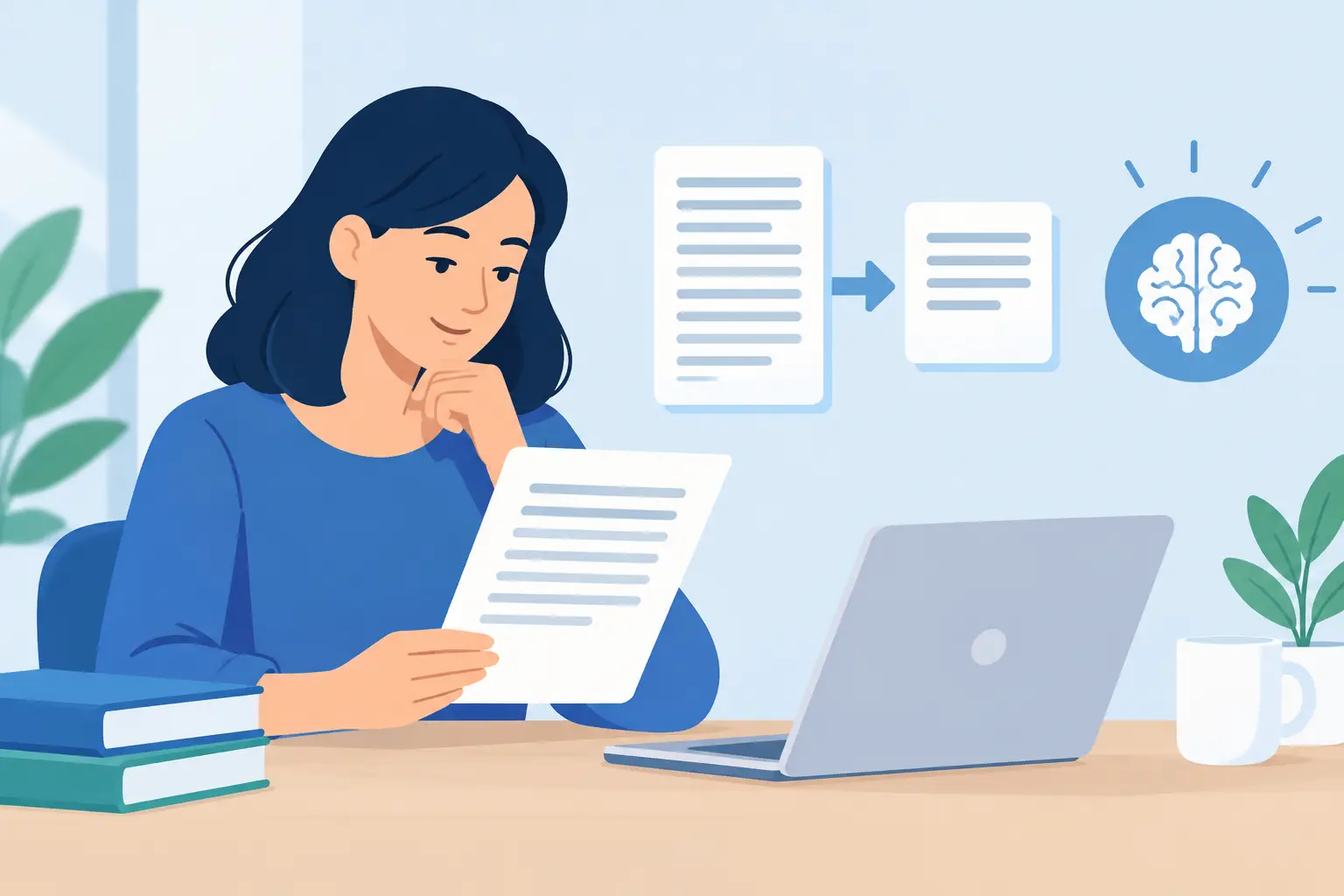
A five-minute article can reveal exactly where your reading breaks down: a word you do not know, a sentence you cannot untangle, or a detail you missed because you were translating every line. The good news is that you can improve comprehension with short articles without turning every reading session into homework. Short, relevant pieces give you enough real language to learn from and a finish line close enough to reach every day.
Long novels and feature stories have their place. But if your goal is practical reading fluency, short articles are often the better training ground. They ask you to follow a complete idea, recognize useful vocabulary, and make sense of how native speakers explain what is happening now.
Why Short Articles Build Reading Comprehension
A short article gives you a complete unit of meaning. There is usually a clear subject, a few key facts, and a conclusion or next development. That structure helps you practice an essential reading skill: understanding the main point before you worry about every unfamiliar word.
This matters because comprehension is not the same as perfect translation. Fluent readers do not pause to decode every word. They notice the headline, identify the topic, use context to predict meaning, and keep moving when a detail is not essential. Short articles make that habit easier to build because the text is manageable enough to reread without frustration.
They also expose you to language as people actually use it. A news report on an election, a product launch, a sports result, or a transit strike contains the vocabulary, phrasing, and cultural references that show up in daily conversation and media. Cartoon sentences will not help you read a headline. Real reporting can.
The trade-off is that authentic news can be dense. Headlines compress information. Journalists use names, numbers, institutions, and topic-specific language quickly. Beginners may need adapted versions of the same story, while advanced learners may benefit from the original complexity. The right level is the one that stretches you without making every paragraph feel impossible.
Choose Articles You Can Finish
The best article is not necessarily the shortest one. It is the one you can read with attention, understand well enough to explain, and return to for review.
Start with topics you already follow in your first language. If you pay attention to technology, read technology news. If you care about soccer, markets, climate policy, music, or travel, begin there. Familiar subject matter reduces the amount of new information your brain has to process, leaving more attention for the language itself.
Look for articles with a focused event rather than a broad analysis. A report about one company announcement is often easier than an opinion piece about an entire industry. A recap of one game is usually more approachable than a season-long tactical analysis. You are not avoiding challenging material forever. You are choosing a clear starting point.
Length matters too. For many learners, 150 to 400 words is enough for a useful session. At that length, you can read once for meaning, check a few important words, and read again without losing the thread. When that becomes comfortable, move toward longer reports or more complex subjects.
Read in Three Passes, Not One Slow Crawl
The fastest way to make a short article feel difficult is to stop at every unknown word. You lose the story, the sentence rhythm, and your confidence. A better approach is to read in passes.
First pass: get the story
Read the headline and the first paragraph. Ask yourself: What happened? Who is involved? Where did it happen? Why does it matter? Do not look anything up yet unless a single word prevents you from identifying the topic.
Then read the rest at a steady pace. Your goal is not precision. It is orientation. Even if you understand only 60 or 70 percent, try to identify the central event and the broad outcome.
Second pass: solve the useful gaps
Now return to the words or sentences that affected your understanding. Prioritize vocabulary that appears more than once, describes the main action, or seems likely to be useful again. A technical term that appears once may be less valuable than an everyday verb such as “announced,” “delayed,” “warned,” or “reached.”
When you check a word, save the sentence around it. A translation alone is fragile. Context tells you how the word behaves: which preposition follows it, whether it is formal, what tone it carries, and what kind of event it describes.
Third pass: read without help
Read the article one more time from beginning to end. This is where new vocabulary starts becoming part of comprehension rather than a collection of notes. The sentence that felt blocked ten minutes ago should now make sense at normal speed.
If it still does not, do not assume you failed. The problem may be grammar, an implied reference, or background knowledge rather than vocabulary. Mark the sentence, get help if you need it, and keep reading. One difficult construction should not end the session.
Make Vocabulary Serve the Article
Saving every unknown word feels productive, but it creates a review pile you will not want to face. Save selectively. Aim for a small number of words that mattered to the story and are likely to appear again.
A useful saved word has three parts: the word or phrase, its meaning in that specific article, and the sentence where you found it. For example, “raise rates” means more than two dictionary entries placed together. In a business article, it describes a policy action with a particular effect. The surrounding sentence gives you a memory hook.
Review matters because recognition during one article is not the same as retention next week. Return to saved vocabulary in short intervals. Try to recall the meaning before revealing it, then reread the original sentence. This kind of active recall is more demanding than scrolling through a list, and that is why it works.
NewsLearner is built around this simple loop: read a current article, save unfamiliar words with sentence-level context, and review them later. Its level adaptation can help a beginner approach the same real-world topics that a more advanced reader sees, without replacing meaningful content with invented exercises.
Use a Comprehension Check That Takes One Minute
After reading, close the article and explain it in your own words. You can say it aloud, write two sentences, or answer three quick questions: What happened? What was the reason or consequence? Which detail was most important?
This check reveals whether you understood the article or merely recognized familiar words. If you cannot explain the main event, reread the first paragraph and the final paragraph. Those sections often carry the core of a news story.
Do not judge yourself too harshly over minor details. Dates, job titles, place names, and statistics are easy to mix up, especially in a new language. Focus first on the relationship between events. Who made a decision? What changed? What might happen next? Accuracy improves as your reading volume grows.
Build a Routine You Can Keep
Consistency beats occasional marathon sessions. A practical routine might be one short article on a commute, during a lunch break, or before bed. Read it in three passes, save a few useful words, and spend a few minutes reviewing older vocabulary. The entire cycle can fit into 10 to 15 minutes.
Some days, you will have energy for a longer article or a difficult topic. Other days, a short entertainment report is enough. Both count. Reading fluency comes from repeated contact with meaningful language, not from choosing the hardest text every time.
It also helps to reread related stories over several days. News develops in sequences. When you follow one ongoing story, names, verbs, and key concepts repeat naturally. What looked like difficult vocabulary on Monday may feel obvious by Thursday because you have seen it used in several contexts.
When Short Articles Are Not Enough
Short articles are excellent for building momentum, vocabulary, and confidence, but they are not the whole picture. Eventually, you need longer texts to practice sustained attention, more varied sentence structures, and deeper argument. Think of short articles as daily training, not a ceiling.
The same is true for listening and speaking. Reading gives you language to recognize and use, but it becomes even more valuable when you discuss what you read, summarize it to a friend, or listen to coverage of the same event. One news story can become a small ecosystem for language practice.
Still, do not wait until you feel “ready” for real content. Read the news at a level you can handle now, save the language that earns its place, and return tomorrow. One finished article is more useful than a perfect study plan you never start.