AI Reading Versus Human Tutoring for Fluency
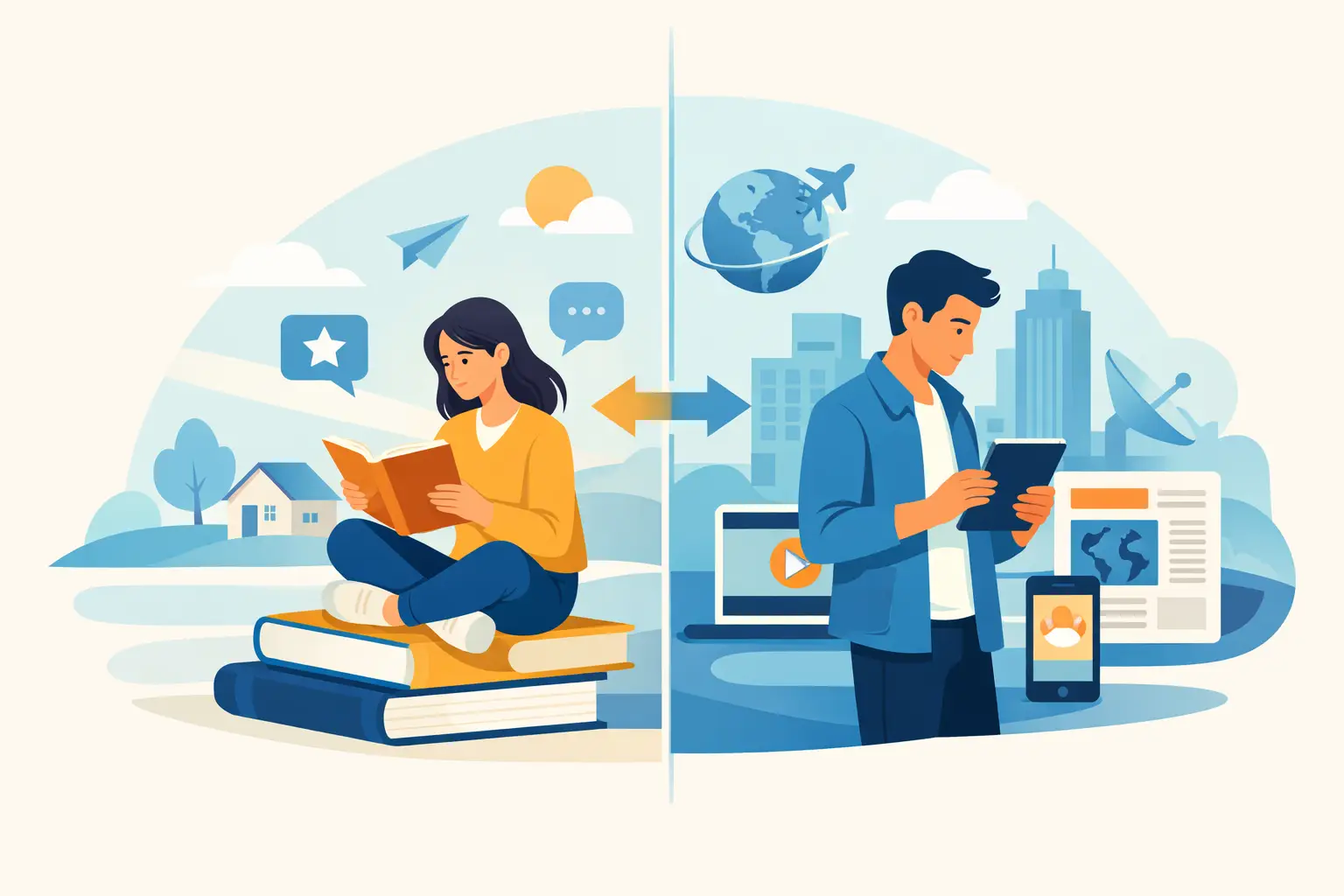
A tutor can hear the hesitation before you speak. An AI reading tool can turn a difficult headline into a lesson while you wait for coffee. AI reading versus human tutoring is not really a contest between technology and teaching. It is a question of which kind of support you need at a particular moment - and whether your study routine gives you enough real language to make progress.
For adults learning a language around work, school, travel, or family, that distinction matters. A weekly tutoring session can be valuable, but fluency is built in the ordinary gaps between sessions: reading a headline, noticing an unfamiliar phrase, seeing it again later, and gradually needing less help.
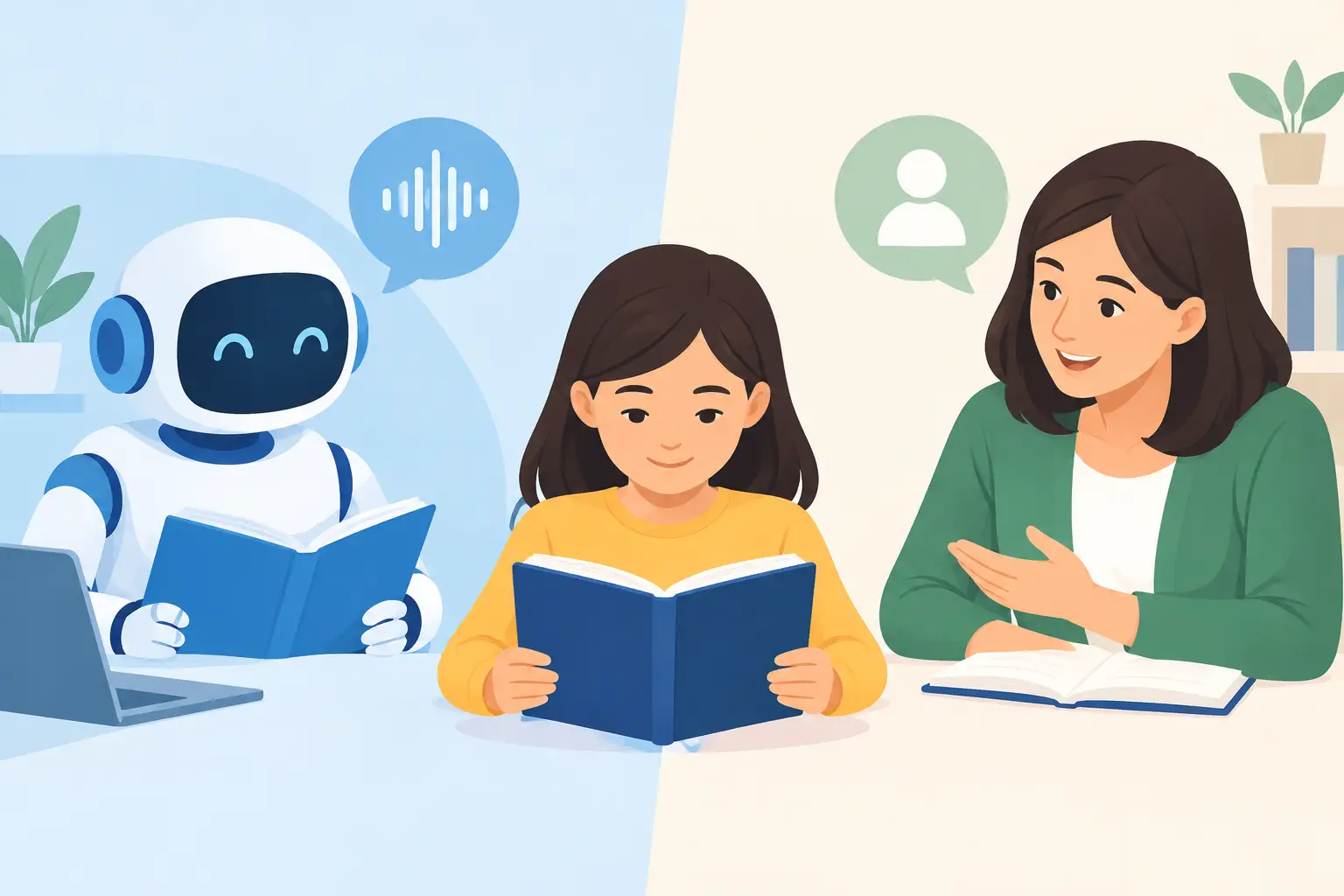
AI Reading Versus Human Tutoring: What Each Does Best
Human tutors and AI tools solve different problems. Treating one as a replacement for the other usually leads to disappointment.
A good tutor provides judgment. They can notice that you understand every word in a sentence but have missed its tone. They can hear whether your pronunciation changes the meaning, challenge an answer that is technically correct but unnatural, and adjust a conversation when you are nervous, tired, or ready for a harder topic. They also create accountability. If someone is waiting to discuss an article with you on Thursday, you are more likely to read it.
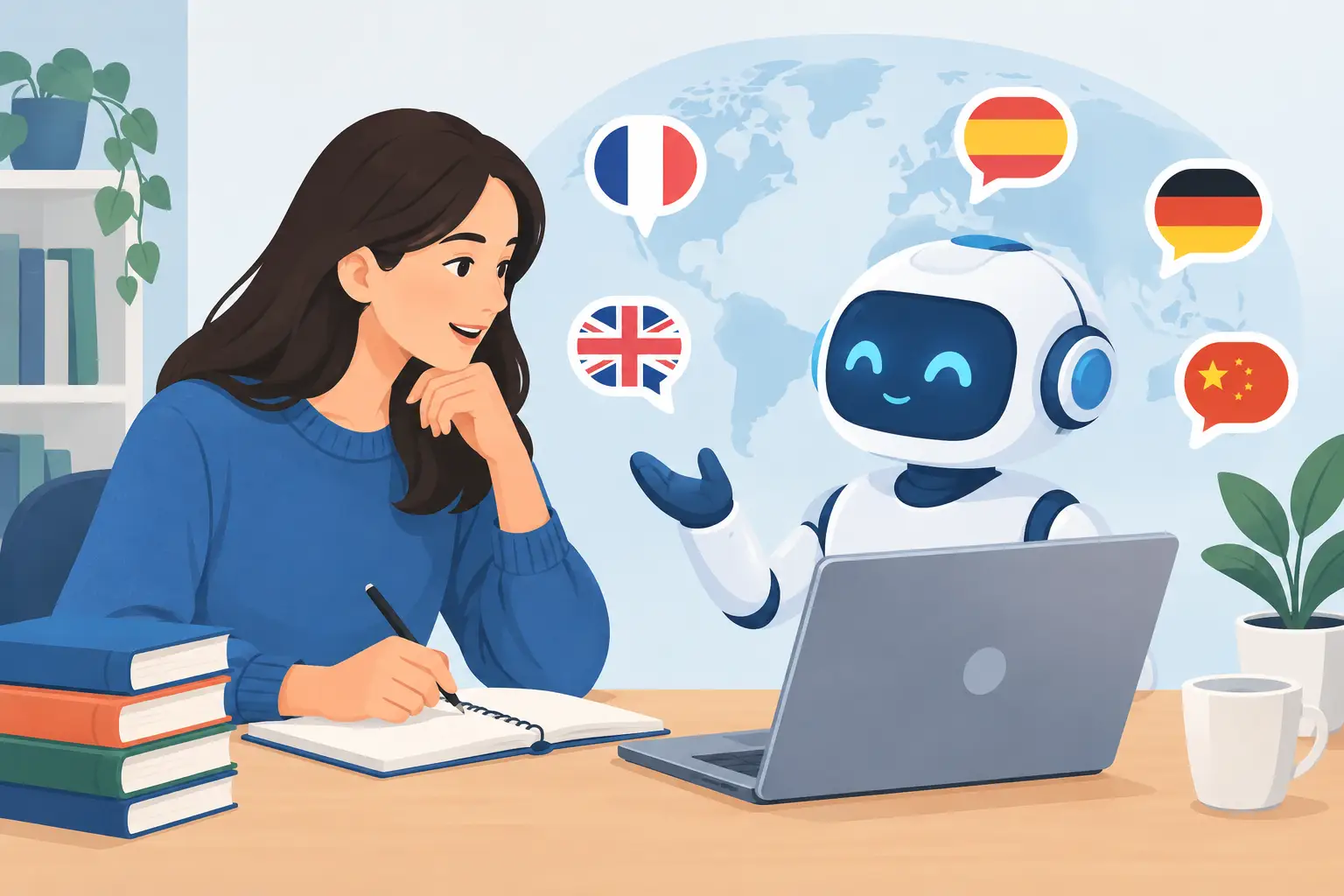
AI reading support excels at frequency and immediacy. It can help you meet the language every day without scheduling a session. When an article is too difficult, an AI system can adapt it to a level where you can keep reading rather than abandoning it after two paragraphs. When a word blocks meaning, you can check it in context instead of opening a separate dictionary, losing your place, and forgetting why you looked it up.
That difference is bigger than convenience. Language learning needs repeated contact with meaningful input. A tutor may give you focused feedback for an hour. Reading tools can help make the other six days of the week productive.
The Case for Human Tutoring
Human tutoring is strongest when the goal involves performance, nuance, or confidence under pressure. If you need to prepare for a job interview, a university discussion, a presentation, or a move abroad, live feedback is hard to beat. A tutor can respond to what you actually say, not just what an exercise expected you to say.
Tutors are also better at diagnosing persistent problems. Maybe you always use a direct translation from your first language. Maybe you understand the past tense on a page but avoid it in conversation. Maybe you know plenty of vocabulary but cannot organize an opinion aloud. An experienced teacher can identify the pattern, explain it clearly, and give you targeted practice.
There is a cultural advantage, too. News stories carry assumptions, irony, political framing, and references that are rarely captured by a literal translation. A tutor can help you ask better questions about what you are reading: Why does this headline use that verb? Does this phrase sound skeptical? What would a native speaker infer from it?
Still, tutoring has practical limits. It costs time, requires scheduling, and may not offer enough exposure on its own. Even excellent lessons can become disconnected from daily language if the learner returns to textbook dialogues or does not read between meetings. A tutor can guide the route. You still need miles on the road.
Where AI-Powered Reading Has the Advantage
Reading is where many adult learners can build those miles. It is private, flexible, and naturally scalable. You can read for five minutes on a commute or spend an evening following a story that genuinely interests you. More importantly, authentic reading exposes you to the language people use when something is actually happening.
Cartoon sentences will not help you read a headline about an election, a product launch, a match, or a market shift. They may teach isolated words, but they rarely show which words travel together, how a claim is softened, or why a simple verb choice changes the force of a sentence.
AI-powered reading can lower the barrier without replacing the article's reality. For a beginner, that might mean shorter sentences and clearer vocabulary. For an intermediate learner, it may mean preserving more of the original structure while explaining difficult phrases. For an advanced reader, the value may be less about simplification and more about quick grammar help, precise definitions, and a way to collect new expressions worth revisiting.
The best use of AI is not to turn every text into a worksheet. It is to keep you moving through material that matters to you. If you care about technology, business, sports, science, or world events, a relevant article gives vocabulary a reason to stick. You remember a word more easily when it belongs to a story you wanted to understand.
NewsLearner is built around that practical loop: read real reporting, save unfamiliar words in the sentence where they appeared, then review them later. Its A1-C1 article adaptation helps learners choose a level that stretches comprehension without making every reading session a test of endurance.
The Risks of Relying on Either One Alone
AI tools can create a false sense of progress if they answer every question before you have tried to infer meaning. Constant translation may get you through an article, but it can prevent the useful mental work that builds reading instincts. Simplified texts can also become too comfortable. If you never return to fuller, messier language, native material will continue to feel distant.
There are quality limits as well. AI explanations can be wrong, overly confident, or insensitive to a regional usage. It may explain grammar accurately while missing the social reason a phrase sounds formal, blunt, playful, or outdated. Verify anything that feels consequential, especially in professional, legal, medical, or political contexts.
Tutoring has its own trap: outsourcing momentum. Some learners become excellent at their scheduled lesson and do very little outside it. Others spend most of the hour correcting small errors when what they really need is broader exposure and the confidence to consume language independently.
Privacy deserves attention, too. Reading history can reveal interests, questions, and routines. Before making an AI study tool part of your daily habit, consider what it stores, where it is processed, and whether you are comfortable with those trade-offs. Convenience should not require giving away more of your learning life than necessary.
A Better Routine: Read First, Discuss Later
For many learners, the most effective approach is simple: use AI-supported reading for volume and use a tutor for depth. Read a few short articles during the week. Save only words and phrases that are likely to matter again. Review them in their original sentence, not as disconnected flashcards.
Then bring one article to a tutor. Do not ask them to translate it line by line. Ask what the headline implies, which phrases sound natural, how the writer frames the issue, and how you would explain the story in your own words. That turns tutoring time into a high-value conversation instead of a costly dictionary session.
If you do not have a tutor, you can still create a useful follow-up. After reading, say or write a three-sentence reaction from memory. What happened? Why does it matter? What do you think? Then compare your version with the article. This exposes the gap between recognition and active use without making practice feel artificial.
Which Option Should You Choose?
Choose human tutoring when you need speaking practice, detailed correction, motivation, or help with a specific high-stakes goal. Choose AI-powered reading when your biggest problem is consistency, vocabulary growth, or finding material you will actually want to read every day.
If your budget or schedule only allows one, start with the obstacle in front of you. A learner who freezes in conversation may need a person. A learner who rarely encounters the language outside class may need a reading habit first. Neither choice has to be permanent.
The useful question is not whether a machine can replace a teacher. It is whether your current routine puts real language in front of you often enough to become familiar. Read something that matters, save what you cannot yet say, and return to it until the language begins to feel like yours.